
Machinery & Equipment Appraisal
Machinery and equipment donation appraisal services for IRS Form 8283 filings and non-cash charitable tax deductions, prepared in accordance with USPAP. Legacy Donation Appraisers values manufacturing equipment, construction machinery, agricultural equipment, medical devices, and restaurant equipment nationwide.
- USPAP-Compliant & IRS-Qualified Appraisals
- IRS Form 8283 included
- Secure a tax deduction for your non-cash charitable donations










EQUIPMENT DONATIONS
A Fully Depreciated Asset Can Still Have Real Market Value
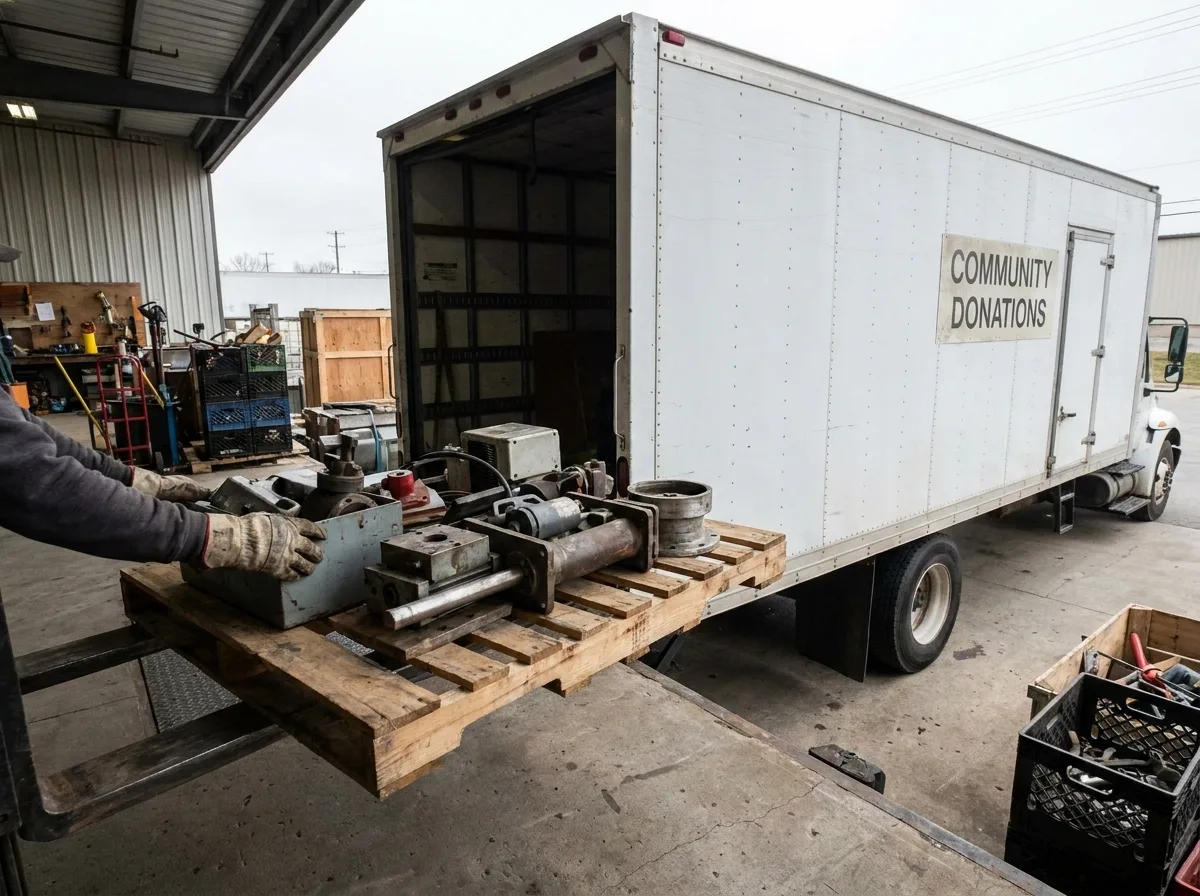
Equipment doesn't have to be obsolete to be worth donating. A press, forklift, or diagnostic system that no longer fits a company's operations can still have real value to a nonprofit, trade school, or community program, even after it's fully depreciated on the donor's books.
That's where a qualified appraisal matters. The IRS bases the charitable deduction on fair market value at the time of donation, not on what the equipment is worth on a balance sheet, so an independent appraisal is what separates a defensible number from a guess.
This comes up most often during facility closures, equipment fleet upgrades, post-merger consolidation, and plant downsizing, when usable machinery is being replaced faster than it can be resold at a fair price. Legacy Donation Appraisers helps donors and their advisors document that value correctly from the start, and our guide to IRS Form 8283 covers the full filing requirements.
EQUIPMENT CATEGORIES
Every Category of Machinery and Equipment, Covered
Equipment donations span a wide range of industrial, commercial, and specialized assets. Our appraisers match the right market and cost data to the specific category of equipment you're donating.
- 01
- CNC machines and lathes
- Industrial production lines
- Printing and packaging equipment
- Woodworking and metalworking machinery
- 02
- Excavators and bulldozers
- Cranes and aerial lifts
- Compactors and pavers
- Material handling equipment
- 03
- Tractors and combines
- Irrigation systems
- Grain handling and storage equipment
- Livestock handling equipment
- 04
- Diagnostic imaging systems
- Surgical and dental equipment
- Laboratory analyzers
- Sterilization equipment
- 05
- Combi ovens and ranges
- Walk-in coolers and freezers
- Commercial mixers and prep equipment
- Ventilation and exhaust systems
- 06
- IT infrastructure and servers
- HVAC and mechanical systems
- Forklifts and warehouse equipment
- Fitness and gym equipment
HOW IT WORKS
Legacy Donation Appraisers Documents Equipment Details, Market Comparables, and Fair Market Value Before You File
- 01
Equipment Details & Documentation
Share make, model, year, serial numbers, and any maintenance or purchase records you have on hand.
- 02
Market & Comparable Research
We research recent sales of comparable equipment through dealer networks, auction results, and specialized market data.
- 03
Inspection, Remote or On-Site
Most machinery and equipment appraisals are completed from photos and documentation; larger or specialized equipment may warrant an on-site inspection.
- 04
USPAP-Compliant Report
We prepare a written appraisal report stating fair market value and the methodology used to reach it.
- 05
Form 8283 Part IV Completed
Our appraiser signs the Appraiser Declaration in Part IV so your donation is ready to file with Section B.
CREDENTIALED APPRAISERS
Our Machinery and Equipment Appraisers Hold Credentials With the ASA, CAGA, and the NEBB Institute
Every machinery and equipment appraisal is prepared in accordance with USPAP by appraisers holding credentials with recognized organizations.
EQUIPMENT DONATION APPRAISAL QUESTIONS
Equipment Donation Appraisal Questions
Do I need a qualified appraisal to donate machinery or equipment?
Yes. When the fair market value of donated machinery or equipment exceeds $5,000, the IRS requires a qualified appraisal prepared in accordance with USPAP. The donor completes Section B of Form 8283, and our appraiser completes and signs Part IV, the Appraiser Declaration.
How is fair market value determined for donated equipment?
We weigh three approaches depending on the equipment: the market approach, using comparable sales through dealer networks, auctions, and secondary markets; the cost approach, replacement cost new less depreciation and obsolescence; and, for specialized productive assets, the income approach. The equipment type and available market data determine which methods carry the most weight.
Is an on-site inspection required, or can this be done remotely?
Most machinery and equipment appraisals are completed from photographs, documentation, and equipment specifications you provide. An on-site inspection may be recommended for larger, highly specialized, or higher-value equipment where physical condition materially affects value.
Can I donate fully depreciated equipment and still claim a deduction?
Yes. Equipment that has been fully depreciated on your books can still carry real fair market value in the marketplace. The charitable deduction is based on fair market value at the time of donation, not depreciated book value, and a qualified appraisal is what establishes and substantiates that market value.
How much does an equipment donation appraisal cost?
Equipment appraisal fees are quoted as a fixed fee before any work begins, never hourly. Scope drives the fee: how many assets, how specialized the equipment is, how complete your records are (make, model, year, serial numbers), and whether an on-site inspection is needed. We provide a transparent quote up front.
How long does an equipment donation appraisal take?
Turnaround depends on the size and complexity of the equipment list. Smaller assignments are often completed within a week; larger collections typically take two to three weeks. Tell us your deadline and we'll confirm up front whether we can meet it; expedited service is available.
Request an Appraisal
Get a fixed-fee quote for your equipment donation appraisal.